
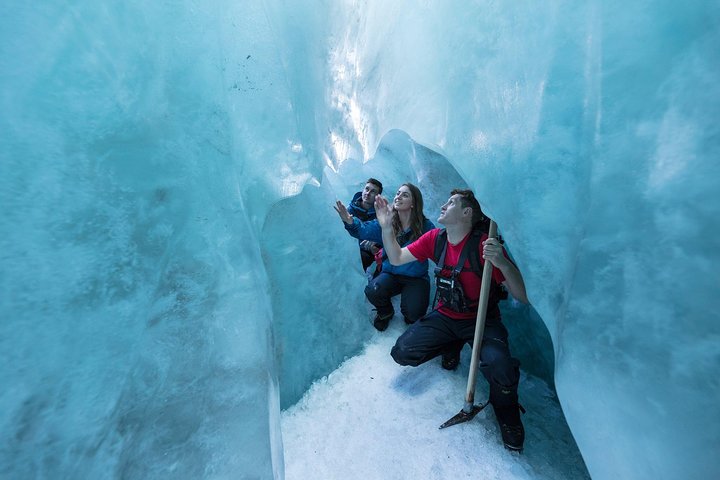


Walking on Ancient Ice
A heli-hike is the signature glacier experience in New Zealand — a helicopter flight onto the upper reaches of Franz Josef or Fox Glacier, followed by a guided walk on the ice with crampons, exploring the ice caves, crevasses, seracs (ice towers), meltwater channels, and the blue-ice formations that the glacier’s immense compression creates. The heli-hike is the only way to walk on these glaciers (the terminal faces are inaccessible on foot), and the combination of the helicopter flight, the alien ice landscape, and the physical engagement of walking on crampons through a frozen world makes it one of New Zealand’s most distinctive guided experiences.
What the Heli-Hike Involves
The helicopter flight (5–10 minutes) lifts you from the village heliport to a landing zone on the glacier’s upper surface — a transition from temperate rainforest to alpine ice in minutes. The flight itself provides an aerial view of the glacier and the surrounding mountains.
The ice walk (2–4 hours depending on the operator and the conditions) is guided by a glacier specialist who leads the group through the ice formations, cutting steps and routes with an ice axe as conditions require. The glacier surface is constantly changing — ice caves collapse and new ones form, crevasses open and close, and the guide navigates a route through the safest and most spectacular terrain available on the day. No two heli-hike routes are identical.
The ice formations are the visual reward — blue ice (compressed ice that absorbs red light and reflects blue, creating an intense, otherworldly colour), ice caves (tunnels and chambers within the glacier, illuminated by light filtering through the ice walls), seracs (towers of fractured ice at the icefall, some 10+ metres tall), and meltwater channels (streams running through carved channels in the ice surface).
Equipment is provided: boots fitted with crampons (spiked metal frames that grip the ice), waterproof jacket and over-trousers, and all safety equipment. You bring warm base layers, gloves, a warm hat, and sunglasses (the glare off the ice is intense).
Practical Tips
The heli-hike is the most weather-dependent activity. It requires flyable conditions for the helicopter and safe conditions on the ice. Cancellation rates are higher than for valley-based activities. Allow at least two days in the glacier region to accommodate weather.
Moderate fitness is required. The walking is on uneven ice with crampons — not technically difficult but physically engaging. You need to be comfortable walking for 2–4 hours on irregular terrain. The altitude (the upper glacier is at approximately 1,500–2,500 metres) adds a mild physiological load.
Book as early as possible. Heli-hikes are capacity-limited (6–12 people per group, depending on the operator) and sell out in summer. Book weeks ahead for December–February.
Frequently Asked Questions
How long is a heli-hike?
The total experience is approximately 3–5 hours (check-in, safety briefing, helicopter flight, 2–4 hours on the ice, return flight, debriefing). The ice walk itself is 2–4 hours.
How much does a heli-hike cost?
Approximately NZD 450–600 (approximately $270–360 USD) per person including the helicopter, guide, boots, crampons, and waterproof gear.
Do I need ice-climbing experience?
No. The heli-hike is a guided walk on the glacier, not a technical ice climb. No prior glacier or mountaineering experience is required. The guide provides all instruction, cuts the route, and manages the safety. Basic fitness and comfort on uneven terrain are sufficient.
Is the heli-hike safe?
Yes, with reputable operators. The guides are trained glacier specialists, the routes are selected for safety, and the equipment is professional-grade. The glacier environment has inherent risks (crevasses, ice collapse, weather change) that the guides manage through training, experience, and conservative route selection.
Which glacier is better for a heli-hike — Franz Josef or Fox?
Both offer excellent heli-hike experiences. Franz Josef has more operators and more departure slots. Fox is quieter with smaller groups. The ice formations and the walking experience are comparable. Choose based on which village you are staying in or which has availability on your dates.